Riot’s detailed VCT 2027 model moves VALORANT away from long-form league play and toward tournaments, open qualifiers and fixed support for non-partner teams.
The important word is not open, it is repeatable
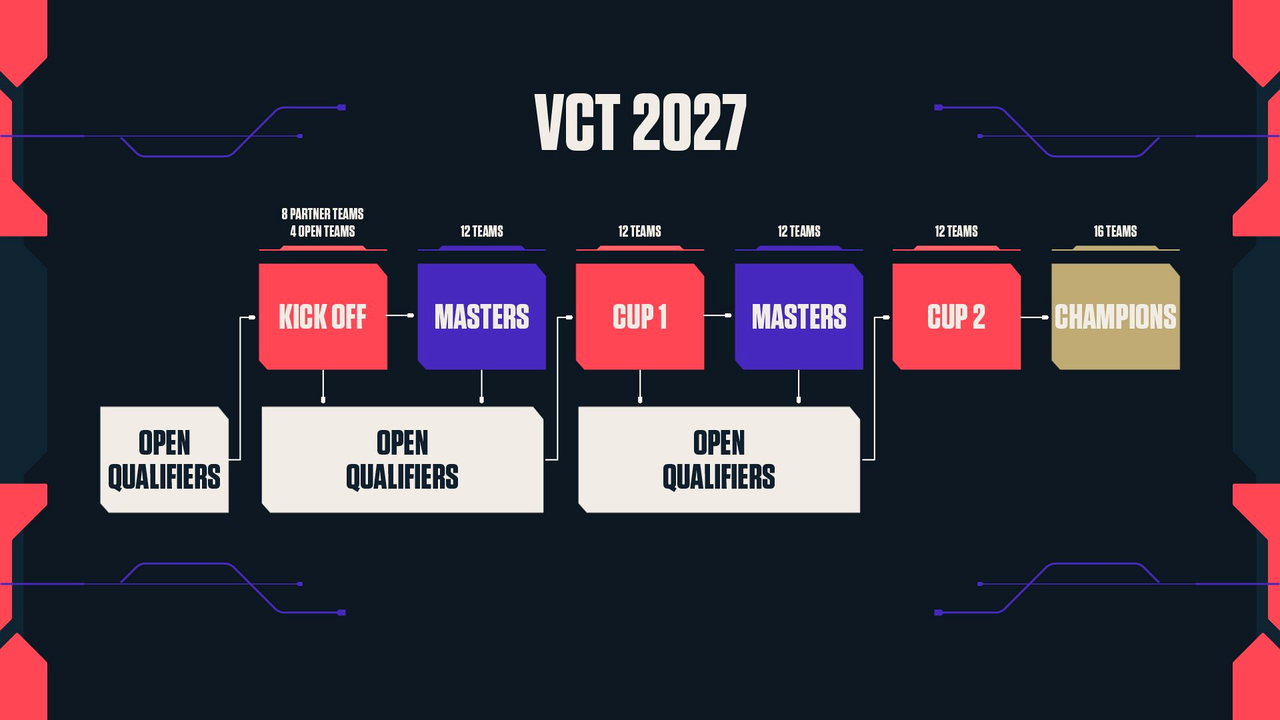
Open qualifiers have existed in esports for years, but Riot’s 2027 plan becomes interesting because it gives open teams more than a symbolic door. Four open slots in major Kickoff fields mean a non-partner roster can enter the same competitive room as the established teams before the season’s story has already hardened.
That changes the ecosystem promise. The old risk with open routes is that a team wins one bracket, appears briefly and then disappears without money, schedule certainty or visibility. Riot’s model tries to make performance repeatable by connecting slots, payouts and roster continuity. The concept is ambitious because it touches competitive structure and team survival at the same time.
Cups make failure arrive faster
Moving away from long-form league play will make the season sharper. A league gives teams time to recover from slow starts, rebuild maps and let star players find rhythm. A cup model compresses those comforts. Poor placement can push a roster down into Open Playoffs, and a weaker previous result can force a team to start earlier in the next qualification chain.
That should make regular matches easier to sell to viewers. Riot’s phrase that every match should matter is often used in esports, but the 2027 format gives it teeth. If partner teams are not automatically protected through every Cup, status becomes less valuable than form. That is a major cultural change for a franchise-style ecosystem.
| Key point | Reading |
|---|---|
| Core change | Cups replace regular-season league play in a tournament-first model. |
| Kickoff fields | Americas, Pacific and EMEA Kickoffs feature eight partner teams and four open qualifier teams. |
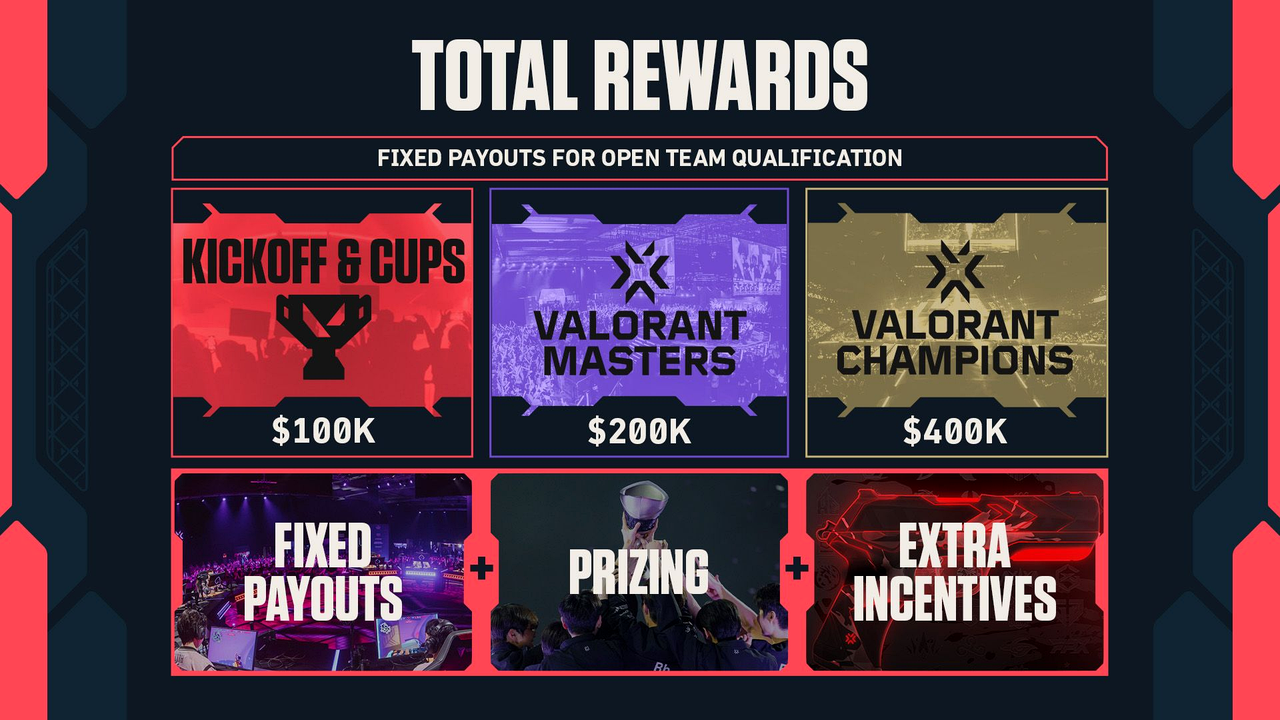
| Open support | Open teams can earn fixed payments for qualifying into Kickoff, Cups, Masters or Champions. |
| Roster rule | Open and creator-led teams keep progress if at least three of five players remain. |
Money decides whether the open path is serious
The fixed payments may be the most important part of the announcement. A team can be talented and still fail if travel, staff, salaries and bootcamp costs arrive before revenue. Payments for qualifying into Kickoff or Cups, then larger support for Masters and Champions, give non-partner teams a clearer way to plan.
Prize money alone is usually not enough because it arrives after the result and can be uneven. Fixed qualification support gives teams something closer to operational oxygen. It does not solve every financial problem, but it tells players and organisations that qualifying into the system has immediate material value.
Roster continuity protects the story
The three-of-five roster rule is another practical detail. Open teams often break apart when players receive offers, when finances change or when a failed event forces a rebuild. If points and progress survive while a core remains, teams can replace pieces without losing the entire season. That matters for competitive memory.
Creator-led teams also benefit from that clarity. The format allows attention, brand and performance to meet without pretending every roster has the same origin. As long as the core keeps playing and earning results, the pathway remains open. That flexibility is important for VALORANT because the game’s audience does not live only inside traditional club structures.
The risk is complexity, but the upside is real
The challenge will be explaining the path cleanly. Cups, Open Qualifiers, Open Playoffs, partner teams, visitor teams in China and incentive payments can become confusing if the broadcast does not visualise it well. A more open system only works for fans if they understand where teams are moving and why each match changes the route.
Still, the upside is obvious. Stage 2 races in 2026 already show how much pressure a qualification map can create. The 2027 model tries to spread that pressure across the entire year while giving outsiders enough support to survive it. If Riot executes the communication, this could make VALORANT’s top level feel less closed without making it less professional.
The promise and the burden of openness
Riot’s open-slot plan is exciting because it admits that a healthy esport cannot rely only on protected names. The strongest ecosystems create pressure from below, where ambitious rosters believe a great run can actually change their year. Four open Kickoff slots in major regions give that belief a shape. They tell smaller teams that the door is not ceremonial. It leads into matches with real visibility and real consequences.
The burden is that openness has to be legible. If fans cannot understand why a team enters through one qualifier, drops into another path, earns a fixed payment and then changes route through a Cup result, the model will feel like paperwork. Riot’s broadcast teams will need clean graphics, consistent language and simple stakes. The format can be complex behind the scenes, but viewers should feel the pressure without needing to study a manual.
For partner teams, the new model is quietly uncomfortable. Status still matters, but it no longer guarantees the same insulation from bad form. A partner roster that starts slowly can be challenged by an open team arriving with confidence and no reputation to protect. That is the cultural value of the change. It makes established teams defend their place through play rather than through history alone.
The fixed payments are the part that may decide whether the promise survives. Open teams need money before they become famous, not only after a miracle run. Travel, coaching, analysis and bootcamps all cost something before the result arrives. If Riot’s support is reliable enough, the 2027 system could produce more than upset stories. It could produce organisations that stay alive long enough to become serious.
China’s different route keeps the model honest
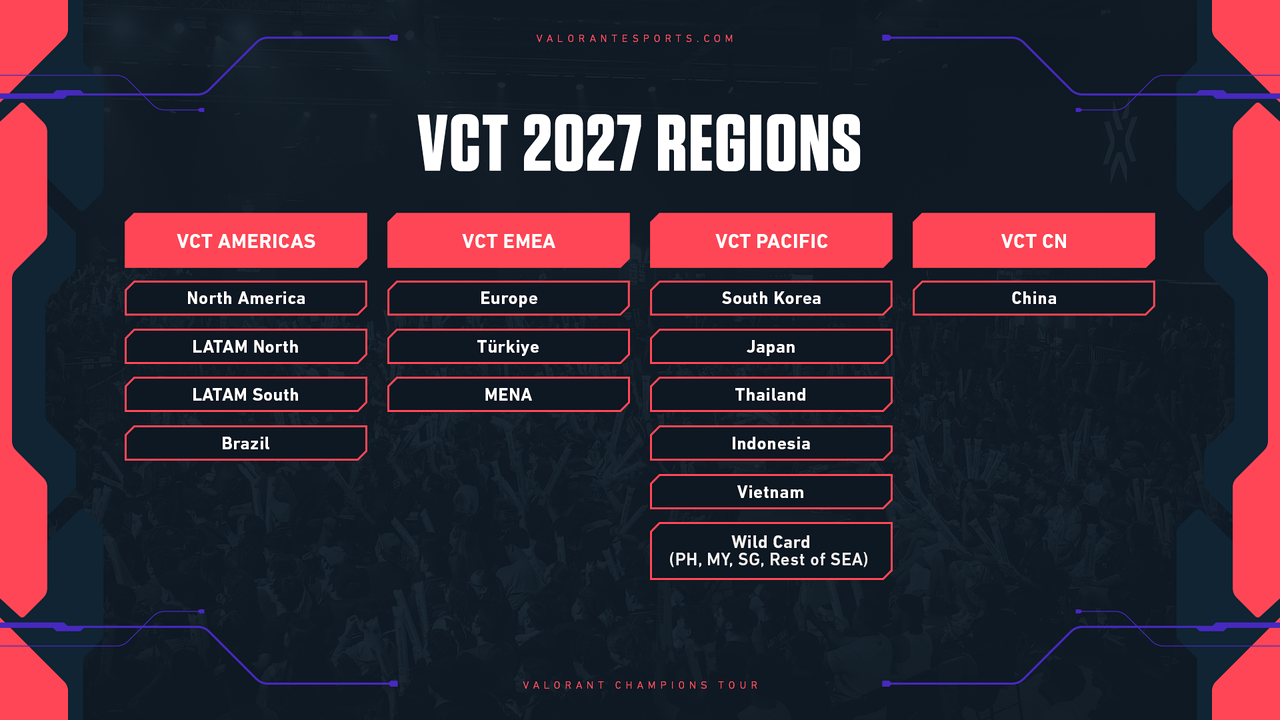
China’s visitor-team route is a useful reminder that openness will not look identical in every region. Riot are not simply copying one bracket across the world; they are trying to adapt the idea to local structures. That can be healthy if the goal remains consistent: give ambitious teams a credible way to meet the top tier and give fans a clear reason to follow the climb.
The risk is that different regional mechanisms create different perceptions of fairness. Riot will need to explain why one region uses open qualifiers while another leans on visitor-team status, and how each path protects competitive integrity. If that communication works, the variation can feel mature. If it fails, the global format may appear less open than the headline promises.
Related context: VCT Americas Stage 2 and VCT EMEA route.