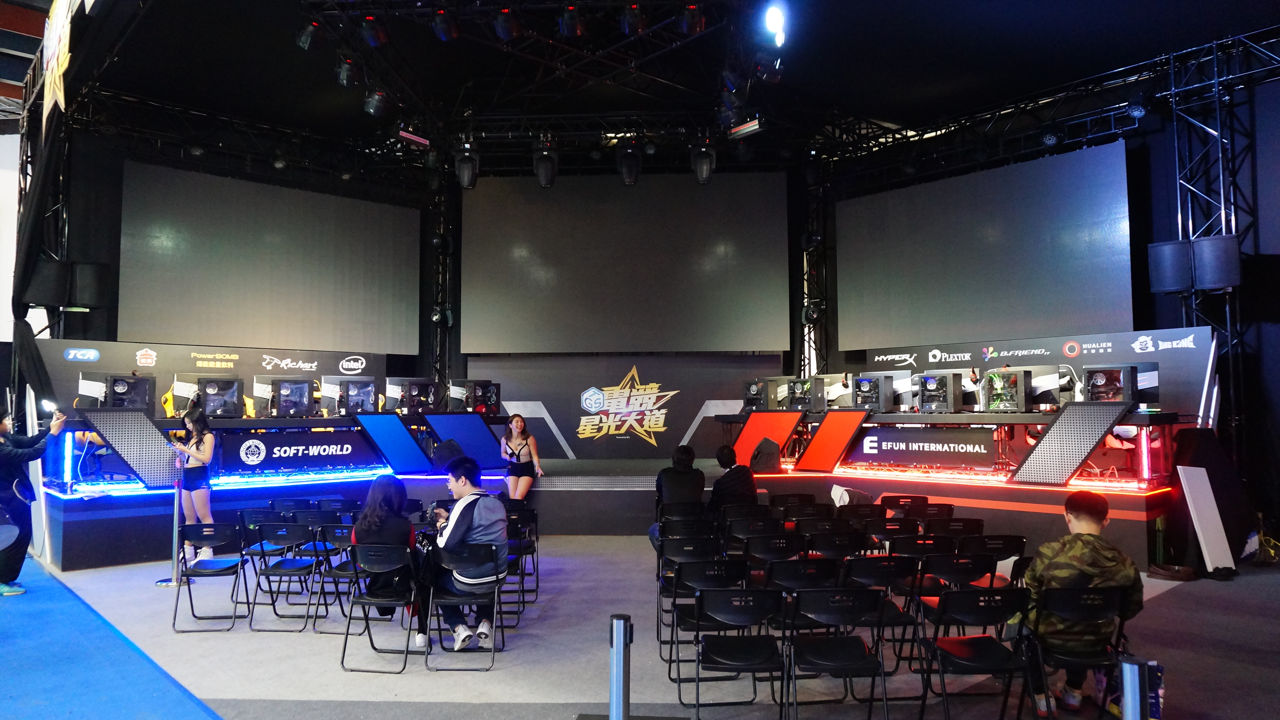
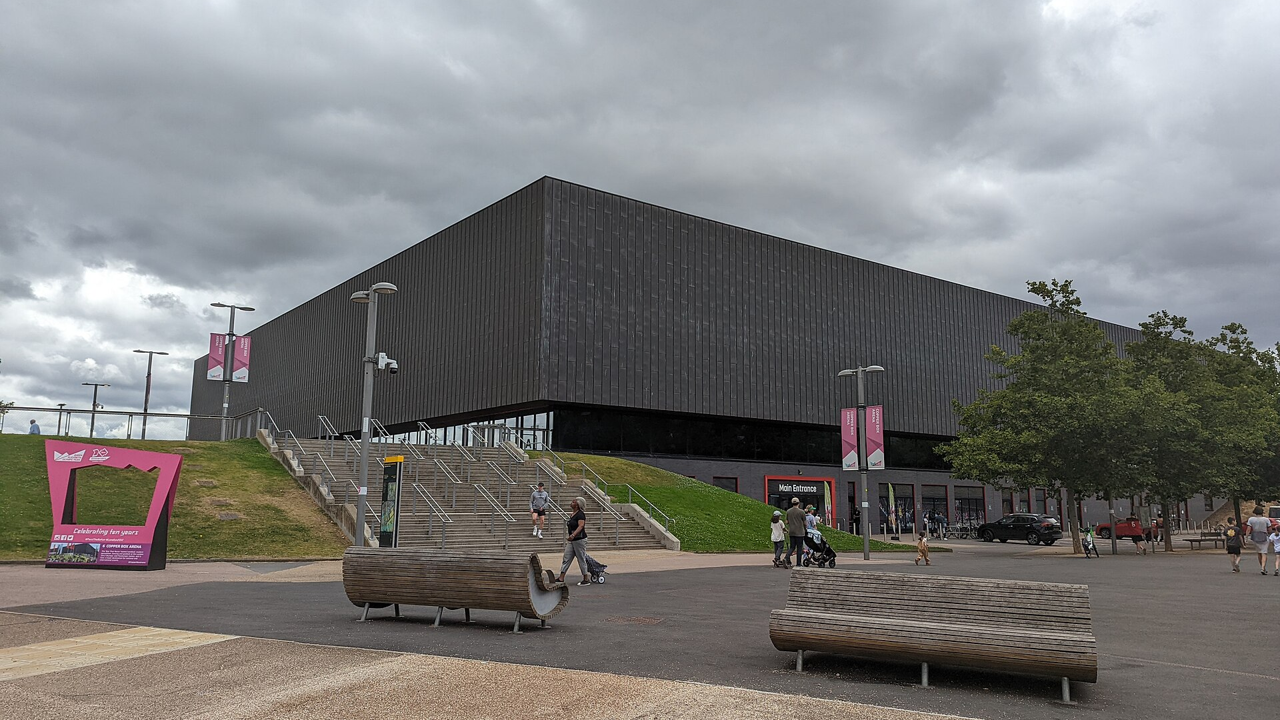
Ask anyone what a Valorant arena should look like, and almost nobody pictures a hall built for Olympic handball. Yet that is precisely where the season’s loudest chapter was written. From 6 to 21 June 2026, VCT Masters London took over the Copper Box Arena inside Queen Elizabeth Olympic Park, and over those two weeks a 7,500-seat box of sprung floors and copper cladding stopped being a relic of 2012 and became the year’s defining stage.
Repurposing an Olympic shell
Nothing about the Copper Box was conceived with a tactical shooter in mind. The hall went up for the 2012 Games as a 7,500-capacity multi-sport venue, taking in handball, fencing and goalball before easing into an afterlife of basketball nights, boxing cards and the occasional concert. That backstory is not trivia.
Riot’s broadcast team read that geometry and built around it. One stage planted in the middle, spectators cinched in on every side, and suddenly there was no slack for the atmosphere to drain into. Seven and a half thousand seats counts as compact next to a true stadium, but compactness is a weapon in Valorant, a game decided by slivers of timing where a crowd sucking in its breath registers almost physically on the feed.
There was hard logic underneath the aesthetics too. A smaller hall is simpler to sell out, and a brimming room translates to camera and stream far more flatteringly than a colossus with bald upper tiers. Several seasons of trial have taught Riot that a stuffed mid-sized arena registers as a win, whereas an over-ambitious booking can make a respectable turnout look sparse.
Reading the viewership and the bracket
The figure that travelled furthest was the audience. The grand final crested above 1.06 million concurrent viewers, clearing the 883,064 mark Masters Santiago had set earlier in 2026 and installing London as the year’s largest Masters. Jumping that far inside a single campaign points to a field that kept tension alive deep into the bracket.
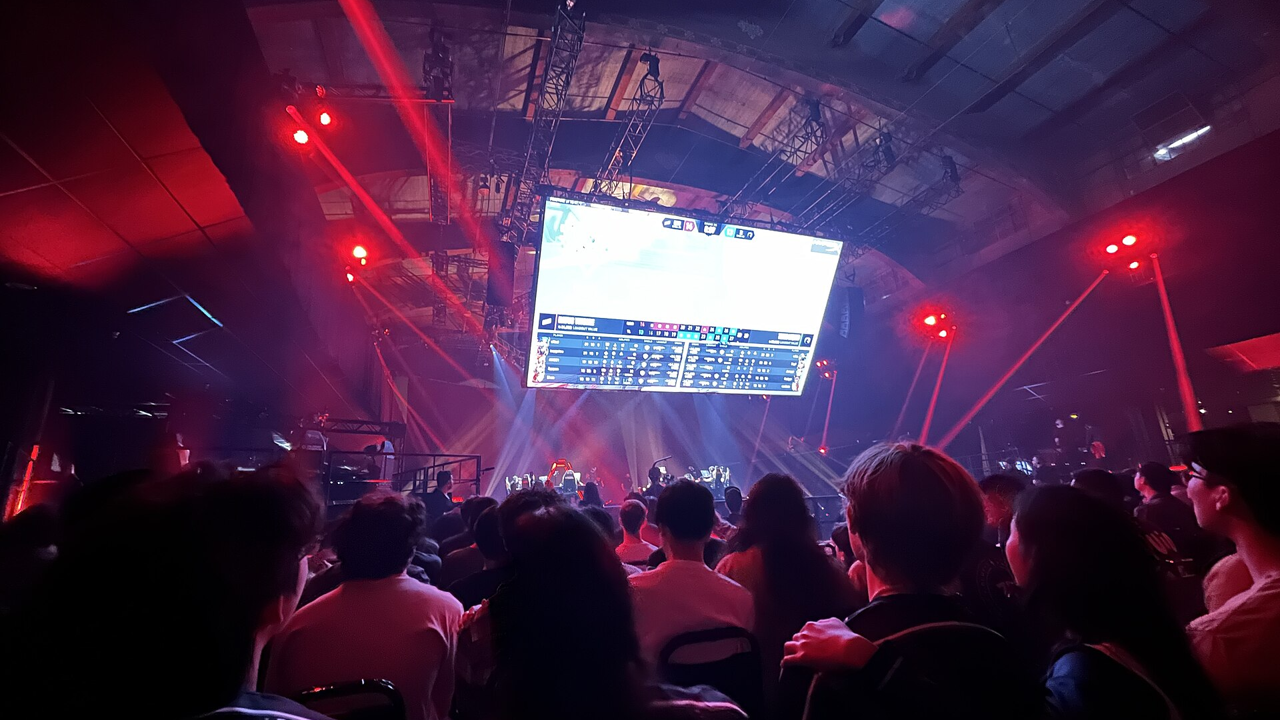
Precision earns its keep here, because the gap between an honest claim and a puffed-up one is all about framing. London’s 1.06 million peak made it the most-watched Masters of 2026, but lined up against the format’s complete back catalogue it lands fifth. Madrid 2024 remains perched at the summit of the all-time Masters chart, untouched by anything London managed. Branding London the biggest event of the year is correct; calling it the biggest ever would not be.
London 2026 at a glance
- Dates: 6-21 June 2026
- Venue: Copper Box Arena, Queen Elizabeth Olympic Park, 7,500 seats
- Grand final peak: 1,060,000-plus concurrent viewers
- Standing: largest Masters of 2026, fifth most-watched in the format’s history
Where the million dollars landed
One million dollars sat on the table, and the way it broke up sketched its own narrative. Leviatan walked away with the heaviest slice at $350,000, a champion’s purse hauled out of a bracket that handed nobody a soft route. Paper Rex settled for runners-up and $200,000, a finish that stamps a roster into any debate about the planet’s finest. EDward Gaming banked third and $125,000, and Team Vitality completed the quartet in fourth for $75,000.
Read those four placements and what jumps out is reach across the map. A South American champion, a Pacific finalist, an East Asian semi-finalist and a European outfit in fourth is exactly the cross-continental pile-up the international structure exists to engineer. Masters tournaments rise or fall on whether the last four feel authentically worldwide, and London’s podium scanned like an atlas of the present-day scene.
The legacy beneath the headline
The lazy move is to flatten an event down to its loudest statistic and walk on, but the Copper Box offered more than a viewership line climbing on a chart. Marry an Olympic-grade hall to a sold-feeling 7,500-seat bowl and a final pulling a million-plus sets of eyes, and you get a loop that feeds itself: the sharper the room sounds, the more the stream sparks, and the harder the curious lean in.
That is the understated bequest of Masters London. The trophy belonged to Leviatan and the cash was parcelled out in neat tiers, but the durable lesson is a working proof of concept. A hall with Olympic DNA can carry esports without strain, and the audience turns up when the production lives up to the setting. Whether the circuit’s next stops reach for bigger arenas or guard the intimate template that clicked here is a call the calendar will make on its own.
Frequently asked questions
Did Masters London 2026 set the all-time Masters viewership record?
It did not. The grand final topped out beyond 1.06 million concurrent viewers, making it the biggest Masters of 2026 and pushing it clear of Santiago’s 883,064 high. Measured against every Masters ever held, though, it sits fifth, with Madrid 2024 still occupying the number-one slot.
What is the seating capacity of the Copper Box Arena?
The Copper Box Arena holds 7,500 spectators. Constructed for the 2012 London Olympics within Queen Elizabeth Olympic Park, it has since staged a spread of sports and shows, with Masters London 2026 among the best-watched events it has hosted.
Who took home each share of the $1,000,000 prize pool?
Leviatan claimed the title and $350,000, Paper Rex pocketed $200,000 as runners-up, EDward Gaming took $125,000 for third, and Team Vitality earned $75,000 in fourth.
For a hall that began as an Olympic also-ran, the Copper Box authored itself a remarkable encore. Masters London 2026 demonstrated that the correct room, handled with intent, can lift a tournament out of routine fixture and into genuine spectacle, leaving the circuit a sharp blueprint for what a marquee stop should be. Keep tabs on the latest news as the season keeps writing its story.