From Buenos Aires to the Copper Box: How Leviatan’s Neon Became the Face of South American Valorant
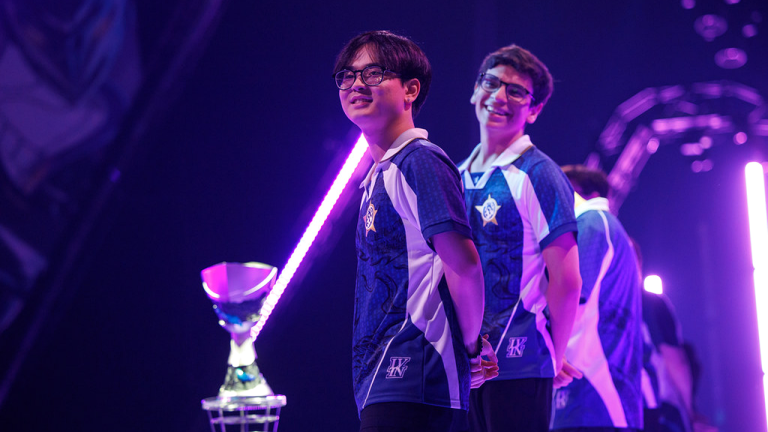
When the final round of the VCT Masters London 2026 grand final ticked over and Leviatan clinched their 3-2 victory over Paper Rex at the Copper Box Arena, the player who sprinted to the centre of the stage was not the team captain, nor the most experienced head in the roster.
It was Neon — a young Argentine duelist whose blistering mechanics and ice-cold composure had defined an entire tournament.
Moments later, the MVP trophy was placed in his hands, and South American Valorant had its clearest statement yet that the region is no longer content to play supporting cast to the traditional powerhouses of East Asia and North America.
The journey that led Neon to that podium is one of the more compelling stories in competitive gaming this year.
Raised on the vibrant Argentine esports scene that produced some of Latin America’s most technically gifted players across multiple titles, he has always carried with him the raw aggression and individual flair that define the regional style.
Masters London 2026 was not simply a breakout moment — it was the confirmation of something those who follow South American Valorant have known for some time: this player operates at a different level.
The Argentine Scene That Forged a Champion
Argentina has long punched above its weight in competitive gaming, its community shaped by fierce domestic tournaments, passionate fanbases, and a culture that rewards mechanical excellence above almost everything else.
The country’s infrastructure for esports has grown considerably over the past half-decade, with organisations investing more heavily in academy pathways and bootcamp facilities to give rising talent the scaffolding they need to compete at an international level.

Neon emerged from that ecosystem, cutting his teeth in regional competitions where the margin for error is slim and the pressure to perform individually — often without the structural support available to players at top-tier franchises — forces rapid development.
The Argentine duelist role, as it is played in the region, demands that a player be both the ignition and the engine: capable of opening space, winning clutches, and carrying the weight of a round when team co-ordination breaks down. It is a demanding template, and Neon absorbed it thoroughly.
His move into the VCT Americas ecosystem with Leviatan brought those raw skills into contact with professional coaching, systematic preparation, and the kind of high-quality scrimming pool that sharpens the edges of even the most talented individual.
The improvement that followed was visible to anyone tracking his performances across the 2025 and 2026 seasons — more disciplined positioning, sharper economy management, and a clutch rate that made opponents profoundly uncomfortable in late-round scenarios.
What MVP at Masters London Actually Means
The VCT Masters tournaments represent the global mid-season showcase of Valorant at its highest level, drawing the best teams from each of the three major leagues — Americas, EMEA, and Pacific — as well as representation from the China region.
Performing well enough to be named MVP at such an event requires a player to produce across a bracket that includes styles, strategic systems, and individual talents from every corner of the competitive world. There is nowhere to hide, and no regional quirk that opponents will fail to exploit.
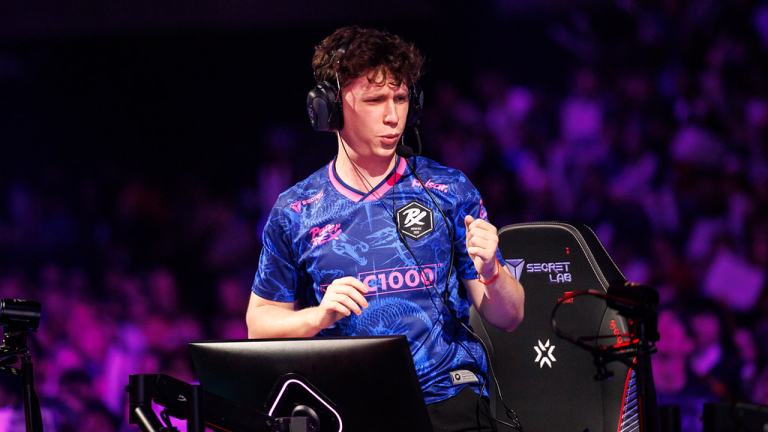
Against Paper Rex in the grand final — a best-of-five series that extended to its full distance — Neon’s ability to operate on the agent the series demanded while continuing to create and convert individual opportunities was central to Leviatan’s ability to close the match out.
Paper Rex are widely regarded as one of the most unpredictable and chaotic teams in the world, capable of overwhelming structured defences with sheer pace and layered aggression.

Containing and then defeating them requires a combination of collective discipline and individual brilliance that Leviatan, and Neon specifically, delivered across a punishing five-map set.
Being handed the MVP distinction in that context carries genuine weight. It signals that the award was not given on reputation or nationality but earned through demonstrable impact across multiple series against the world’s elite.
For the Argentine player, and for the South American region more broadly, it represents the kind of formal recognition that changes the conversation about where the best Valorant is being played.
Mechanical Profile: What Makes Neon Different
The agent Neon — after whom the player takes his in-game name — is one of Valorant’s most mechanically demanding duelists, built around movement speed, electricity-based utilities, and a playstyle that rewards players who can make fast, instinctive decisions while their character is in constant motion.
In the hands of an average player, the agent becomes a liability, trading positioning stability for a burst of pace that opponents can read and punish. In the hands of someone with the physical skill and spatial awareness to maximise its toolkit, it becomes something close to unstoppable.
What distinguishes Leviatan’s Neon from peers who attempt the same agent is the degree to which his micro-decision-making remains accurate at high speed.
Many players who prioritise pace begin to leak errors when the tempo of a round accelerates — crosshair placement drifts, utility usage becomes reactive rather than proactive, and the risk-reward calculus of each engagement tips unfavourably.
Neon appears to operate with a different ceiling in this regard, maintaining the precision of a methodical entry fragger even when his movement patterns are at their most aggressive.