How the Agent Meta Unfolded at Masters London 2026 — and What It Means for Shanghai
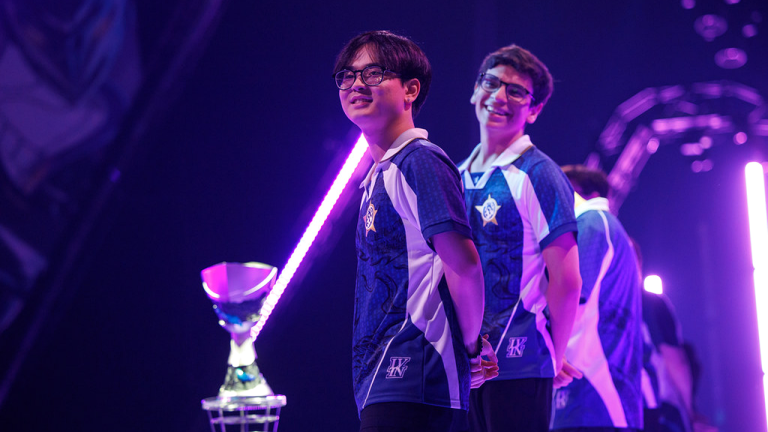
Leviatan lifted the VCT Masters London 2026 trophy at the Copper Box Arena after a pulsating 3-2 grand final victory over Paper Rex, but the tournament left behind far more than a single champion.
Across nearly three weeks of play, the competing teams put every agent in the roster through its paces, stress-tested theories that had been brewing since the Shanghai regional splits, and forced the global Valorant community to reckon with a meta that has shifted meaningfully from anything seen in prior international events.
The data that accumulated across the tournament tells a coherent story — one of Duelists rising back into the conversation, Controllers becoming more map-specific than ever, and one Sentinel in particular stamping its authority on the entire bracket.
Below is the most thorough breakdown available of the agent trends that defined Masters London 2026, and what teams heading to Valorant Champions 2026 in Shanghai will need to absorb before they step on stage in September.
The Duelist Revival: Neon Leads the Charge
The single most discussed agent story coming out of London was the meteoric return of Neon. Named the tournament’s Most Valuable Player — and central to Leviatan’s attacking identity throughout the event — Neon emerged as the premier entry Duelist at Masters London 2026.
Teams that had shelved her unpredictable movement kit in favour of more methodical entry tools rediscovered that, in the right hands, Neon’s slide and sprint mechanics are almost impossible to default-counter at the highest level of play.
Jett, historically the safe Duelist pick at every international LAN, remained a staple across all five maps in the pool, with high pick rates particularly on Pearl and Ascent where her dash provides reliable site-exit value.
Raze continued to find play on maps with tight corridors — notably Bind — where her Blast Pack movement and Showstopper ultimate generate outsized chaos in cramped post-plant scenarios.
What separated London from earlier events was not that one Duelist replaced another, but that teams increasingly ran two-Duelist compositions far more willingly than they had during the 2025 cycle.
Reyna and Yoru, long considered fringe picks at the tier-one level, both registered non-trivial appearance rates during the group stage, though neither broke through into the knock-out rounds with enough consistency to be called meta-defining.
Their presence signals that teams are exploring the outer edges of Duelist theory, even if the bracket stages continued to reward the more proven options.
Controllers: Omen Dominant, Viper Map-Gated
If Duelists were the story of the group stage, Controllers were the story of the map pool. Omen registered the highest overall pick rate of any Controller across the tournament, appearing in the vast majority of maps played.
His global presence, flexible smoke placement, and teleport-based site lurks make him the most platform-agnostic Controller in the game, and London’s format — with its wide variety of maps — played directly into his strengths.
Teams with disciplined Omen players built significant economy advantages through well-timed post-plant smokes and information denial.
Viper’s story at Masters London was one of strict map-gating. On Icebox and Breeze — had either been in the current pool — she would likely have dominated.
As it stood, Viper found relevant play on Pearl and on certain Ascent reads, but her pick rate was measurably lower than at previous tournaments that featured maps where her wall geometry is more decisive.
Astra, once the backbone of structured team play, appeared sparingly; the slow economy of her setup time has made teams reluctant to commit to her in best-of-five bracket matches where adaptability round-to-round matters enormously.
Harbor remained a true situational pick — respected for the unique vision-blocking properties of his wall on specific executes, but never a first-choice Controller for any team that made the semi-finals.
The data suggests that as map pools evolve heading toward Champions Shanghai, Controller meta will likely consolidate further around Omen with Viper as a hard-counter pick rather than a parallel staple.
Initiators and the Information War
Fade and Gekko split Initiator duties in a way that reflected each team’s broader strategic philosophy. Fade, with her persistent recon tools, dominated on maps where long-range information and delayed reveals create planning windows — Ascent and Haven in particular generated the highest Fade pick rates of the tournament.
Gekko’s popularity was concentrated on maps and team styles that prioritised lurk-enabling and post-plant reclaim; Paper Rex, whose aggressive tempo-based game was on display throughout their deep run to the grand final, leant heavily on Gekko’s reclaim economy to sustain pressure across extended rounds.
Sova remained active but at lower rates than in previous international cycles, which is a meaningful data point.
Teams appear to have internalised that Sova’s value is front-loaded into pre-round information, while Fade’s value compounds across a round in ways that suit the more aggressive, mid-round adjustment style that defined Masters London’s highest-level play.
KAY/O found consistent play in compositions that prioritised Suppression flash-trades and economic disruption — his flash rate and Suppression timing in Leviatan’s system was noted as a significant contributor to their ability to shut down Paper Rex’s execute-heavy attack patterns in the grand final.